
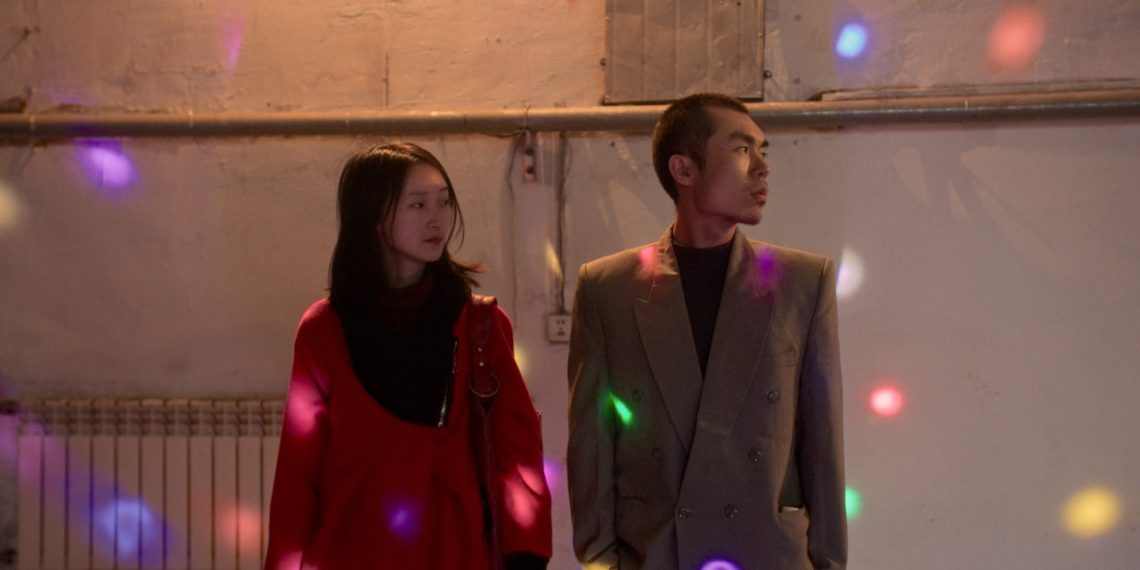
Border, directed by Ah Biao from Hong Kong cinema and screened in the competition section of the San Sebastián Film Festival and won the Special Jury Prize, offers a different image of a strange situation; a place where the film and its characters gradually move in a direction the viewer could never have expected.
At first, and on the surface, the film is a quiet romance between a mine worker and a sex worker, a relationship that will transform their lives. But from the halfway point onward, the characters’ world is drawn into a strange story of revenge, in which everything that appeared ordinary and familiar on the surface takes on a different meaning underneath.
The film is extremely sparing with words; there is little dialogue, and in its narrative, it does not reveal or explain everything. Even in the end, it does not explicitly state the reason for this revenge, offering only hints about the husband’s condition that may lead us toward an open-ended conclusion.
This same approach also finds meaning within the film’s structure: everything unfolds in a minimalist manner, while the filmmaker’s mostly static camera, in wide shots, observes the cold and bitter lives of characters trapped in a closed circle. The film begins with its male protagonist, a man who spends his days in the mine, passing through repetitive, identical, exhausting days. But his encounter with a sex worker apparently changes everything. Yet the film tells us that his fate will become even darker, and that there is no escape from it.
The way the film creates its spaces and frames its characters shares with us this sense of being trapped in poverty and loneliness. At one point, the static camera observes part of the man’s body as another man’s hand reaches inside his underwear; in subsequent shots, this is contrasted with the naked body of a woman and the explicit display of the man’s genitals. Everything apparently points toward the beginning of a new life, but the woman who initially seemed innocent, lovable, and a victim gradually turns, from the halfway point onward, into a kind of femme fatale, someone with a strange past behind her who is pursuing something else.
The film is remarkably frank and unrestrained both in its depiction of sex and in its depiction of poverty, as though portraying an apocalypse in which naked bodies are preparing themselves for harder days ahead. Conversely, the film avoids directly depicting violence and presents the murder scenes indirectly, while ultimately leaving us with a film whose underlying violence is deeply affecting. The image of the man’s body during sex takes on a new meaning in the final scenes through the image of the husband’s incapacitated body, calling into question the meaning of pleasure and gratification in life.
We are dealing with a film with very little dialogue, in which everything is entrusted to the image. Perhaps this is why part of the story remains untold, but it seems that the filmmaker deliberately has no intention of narrating everything. He simply tells us about a period in the lives of characters who encounter one another amid poverty and loneliness and whose lives are destined for a bitter fate. In this fragment of their lives, the past and the future are of no importance. This is why the filmmaker does not feel obliged to tell us what happened in the past or what lies behind this story of revenge. Everything remains shrouded in ambiguity, as does an unclear future. The film’s story seems to be left unfinished, and the filmmaker offers no explanation for it.
Everything is different in a film that takes shape and moves forward in silence, asking us to watch with patience and contemplation, to reconstruct and carry forward part of the story only in our own minds. This in itself is an engaging experience that, despite the film’s weaknesses, makes it worth watching: a film that is forthright in its depiction of a situation, yet deliberately vague about the details of its story, challenging us to make sense of what we see.